The Harmony Among the Corners and Colors— Montmartre
Once you get off the subway, you can see the Montmartre’s vintage Parisian architecture and sidewalks. As you walk up the stairs, you can see many residents having breakfast and brunch in the corner cafes, enjoying the sunshine and breeze, smiling and chatting with each other about their daily life, and enjoying a moment of peace and quiet.
The overall architectural style of Montmartre is a bit different from the vintage architecture of some areas in Paris. From my point of view, it's a bit like Parisian vintage with a little bit of modern style.
Next, I arrived at one of the famous street, Rue de l'Abreuvoir, which was featured in the movie “Emily in Paris”. Unlike the usual Parisian architecture, color blocks filled all over the architecture: bright colors, greenery and warm afternoon sunshine. The whole street was filled with life—as if I am living in the oil painting.
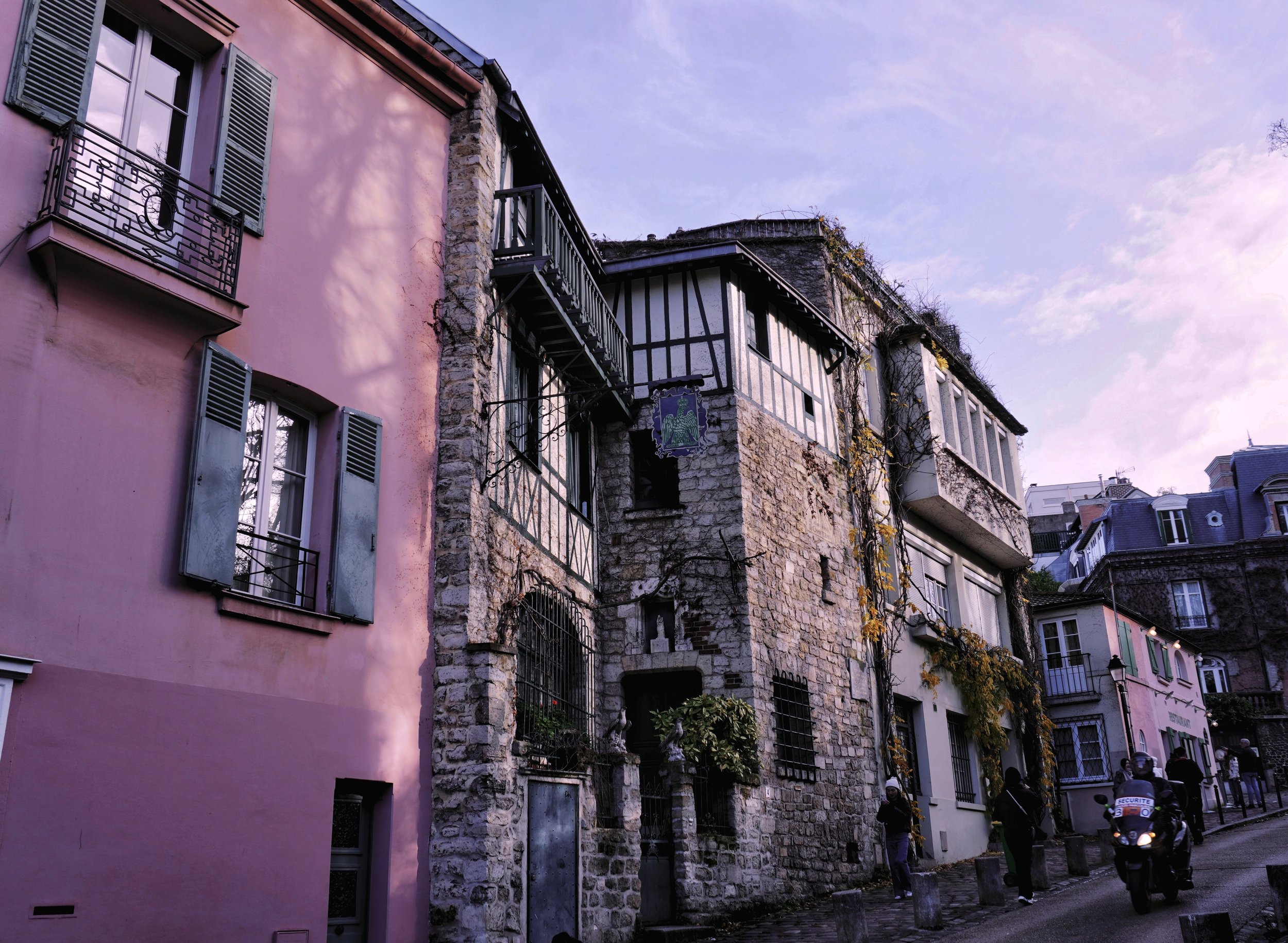
The Street of fairy tale — Rue de l’Abreuvoir— in Montmartre.
Photo by Pei-Ju Chen
There was also a famous cafe on this street, “La Maison de Rose,” the cafe where Emily and Mindy have afternoon tea together in the movie. I didn’t get a chance to visit the cafe. The cafe looked like pink roses entangled with green thorns along with beautiful ray of sunshine. With the green color of the windows, the whole building reached the maximum degree of saturation. The whole atmosphere of the building was very lively.
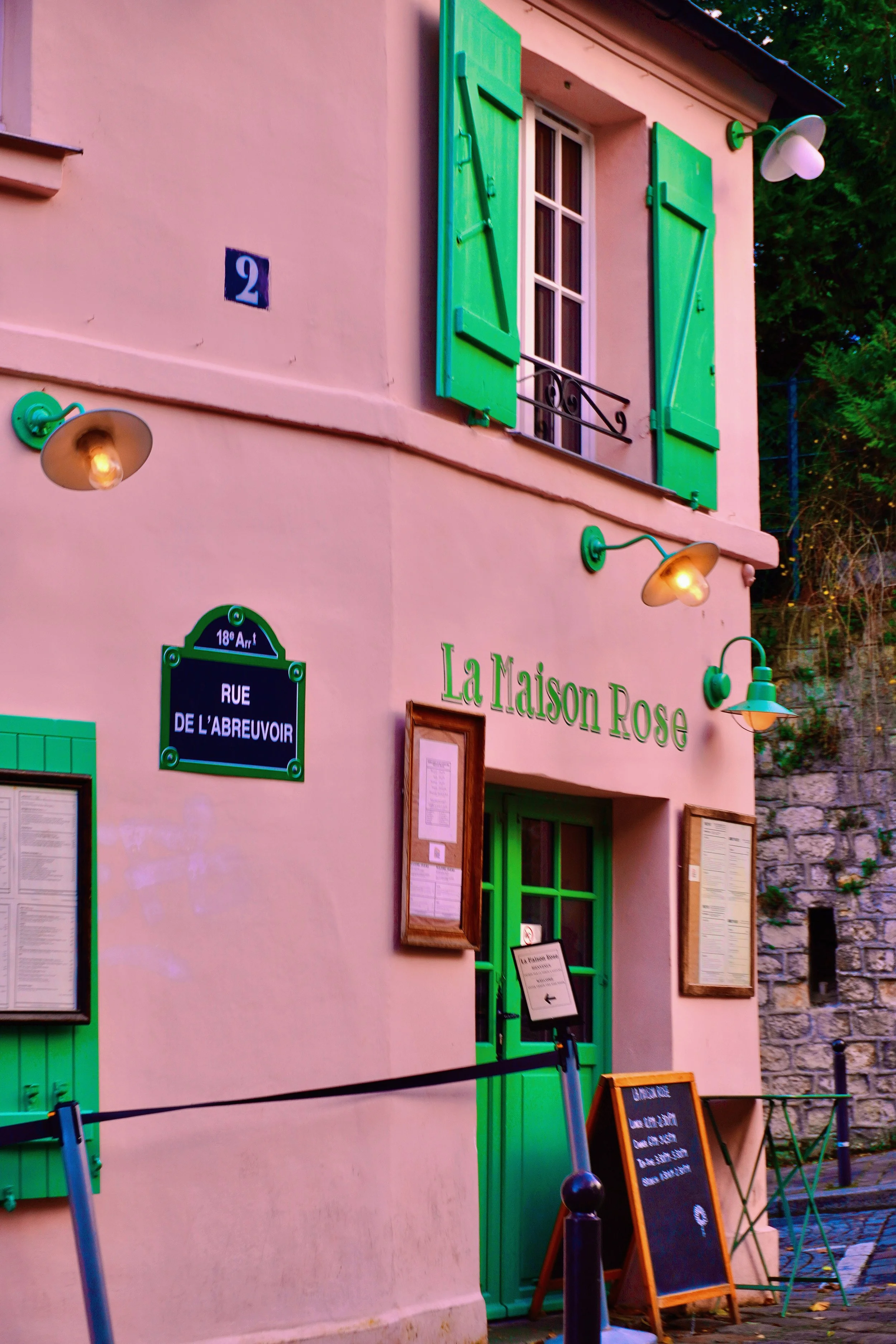
The pink dream in Paris from the letter of Emily in Paris.
Photo by Pei-Ju Chen.
Next came the Montmartre Market, and it was located in the center of a large square. It was surrounded by various restaurants and cafes. Each cafe and restaurant was decorated in a very colorful way, and the whole area is very lively.
Many people sit on the street corners and enjoy lunch and afternoon tea with friends. The tops of the cafes and restaurants, like most French cafes, are decorated with wreaths of flowers and sliders, adding a little bit of excitement to the whole place.
The picture below is a side of the street at Montmartre. There are some vendors and artist setting stans on the side of the street. This is also the popular destination for visitor to gather when they come to Montmartre.
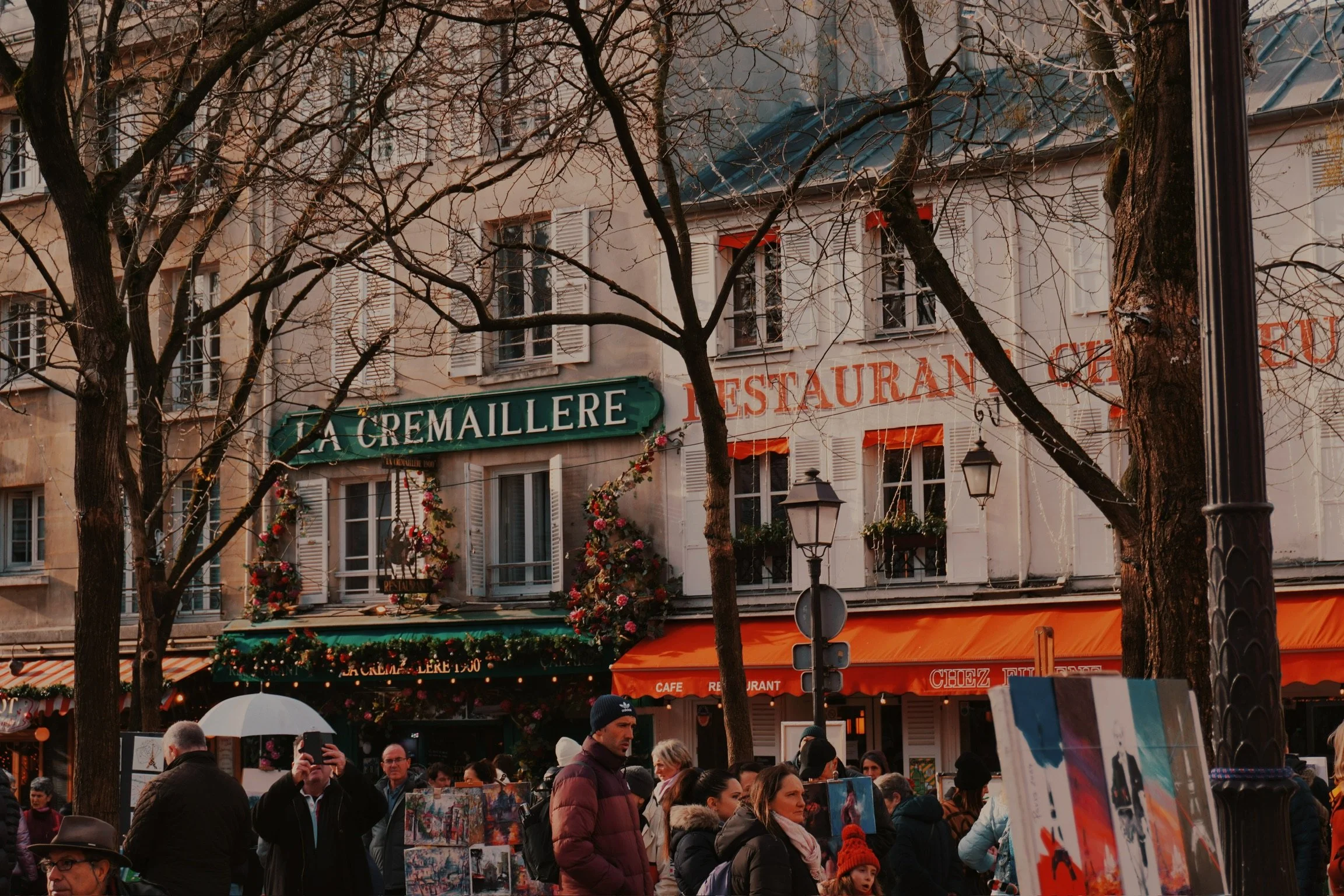
The street around the Montmartre market. The enthusiasm and warmth of being surrounded by people in the winter of December.
Photo by Pei- Ju Chen. Photo courtesy of Life of Juin.
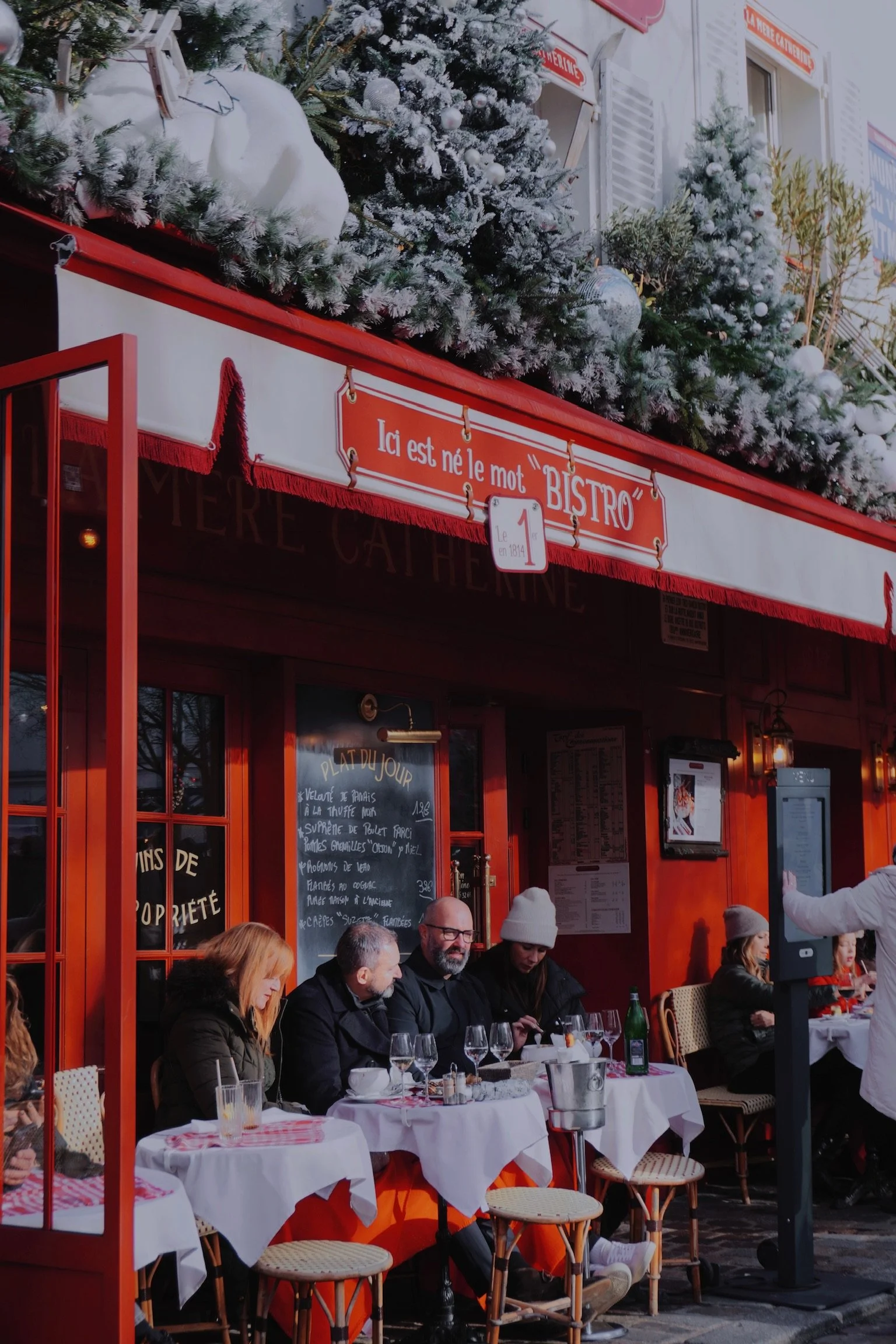
A pleasant afternoon for friends and family gathering to enjoy the breeze at Montmartre.
Photo by Pei-Ju Chen.
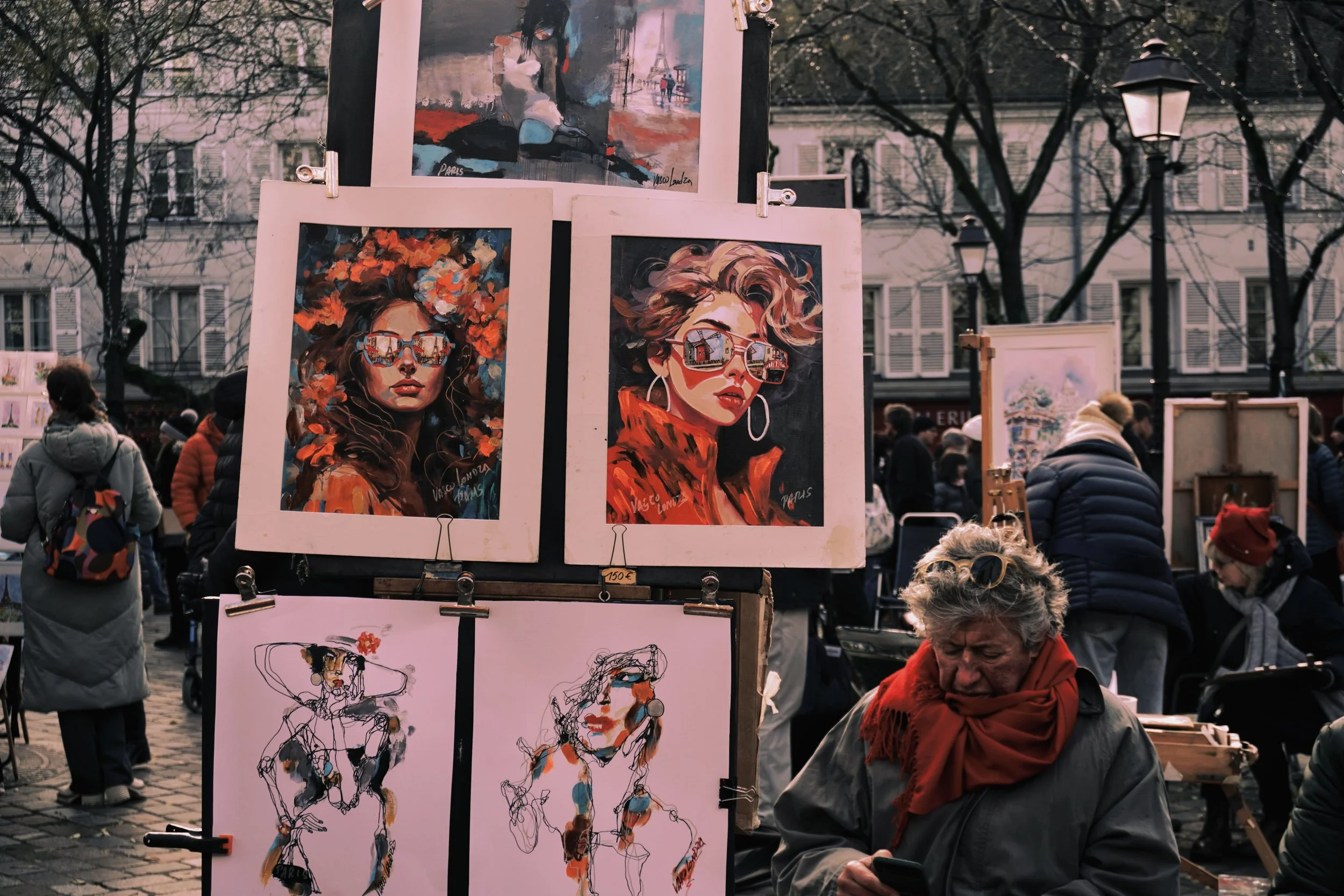
Art market in Montmartre: The Art of the Down. Gathering the art and the creativity of Paris.
Photo by Pei-Ju Chen.,
As we continued our walk, we came across the Sacré-Cœur de Montmartre, a huge building with a white facade and detailed carvings. Opposite the building are the steps, which are filled with people who buy locks from street vendors. People wrote their names and the names of their loved ones, and hang them on the railings facing the church. As far as the eye could see, the railings was covered with locks of all kinds, some have rusted and were locked away long ago.
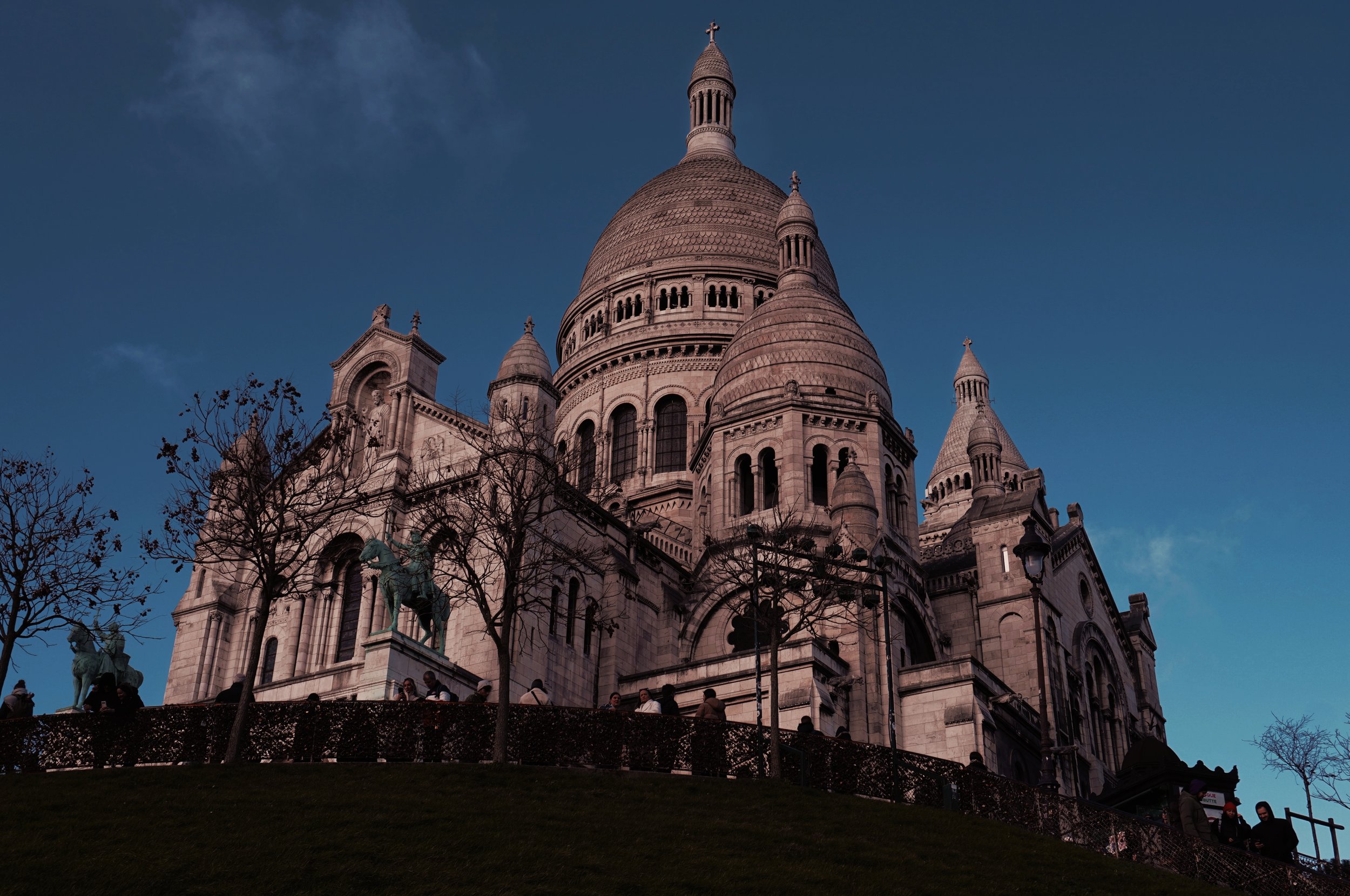
A view of the Sacré-Cœur de Montmartre standing at the bottom of the stairs.
Photo by Pei-Ju Chen. Photo courtesy of Pei-Ju Chen.
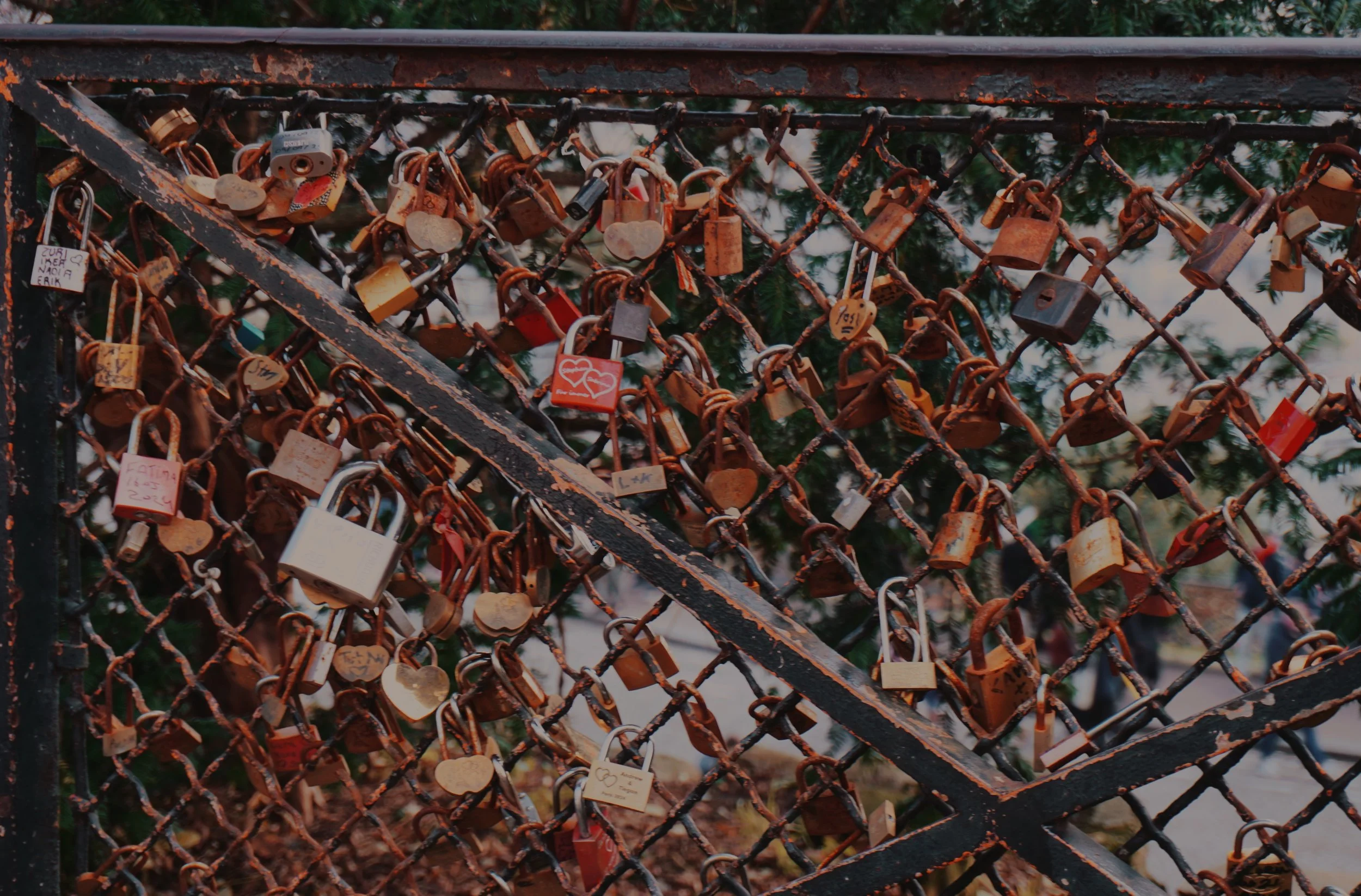
The lock of love.
Photo by Pei-Ju Chen
As you walk down the stairs, you will see an orange and white building. This house become a popular and well known touring destination.
If you walk back a little bit and go up to the middle of the staircase, standing in a position that form a straight line among the lawn and the building, The vertical line up of the building and the hill create an optical illusion as if the house got sunk into the lawn.
Some people gave it an imaginative name called “The Sunken House” (derived from the app from China called Xiaohongshu ).
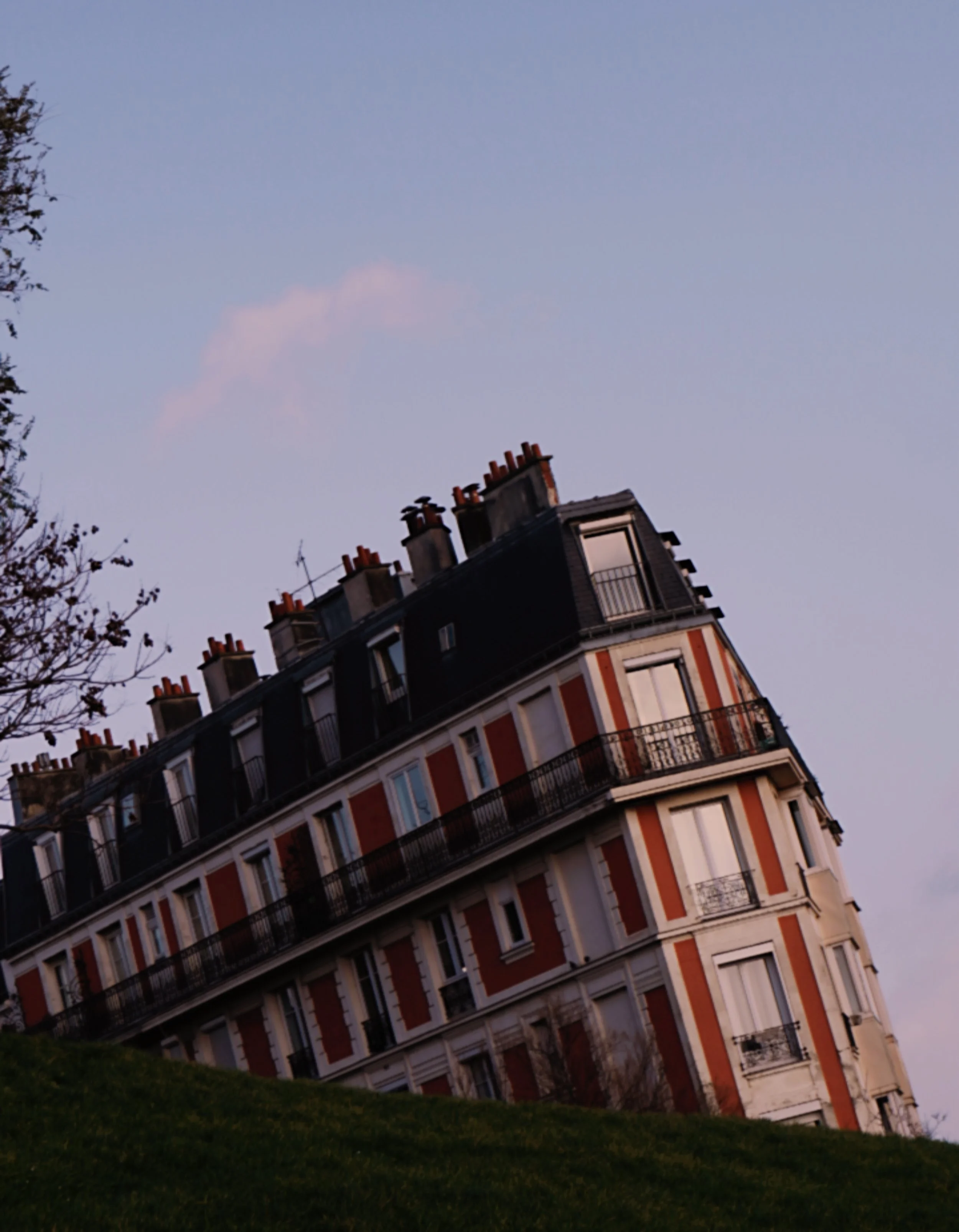
The “sunken house.” This name was derived from Xiaohongshu ( known as the Red Book), an app from China.
Photo by Pei-Ju Chen.
Last but not the least about the beauty of Montmartre— the sunset sink within the city of Paris. Sitting on the stairs in front of the Sacré-Cœur de Montmartre, you can see the whole city of Paris. It is very beautiful, full of storytelling architecture, and in this fairytale-like Montmartre, to me, every scenery is the synonym of happiness.
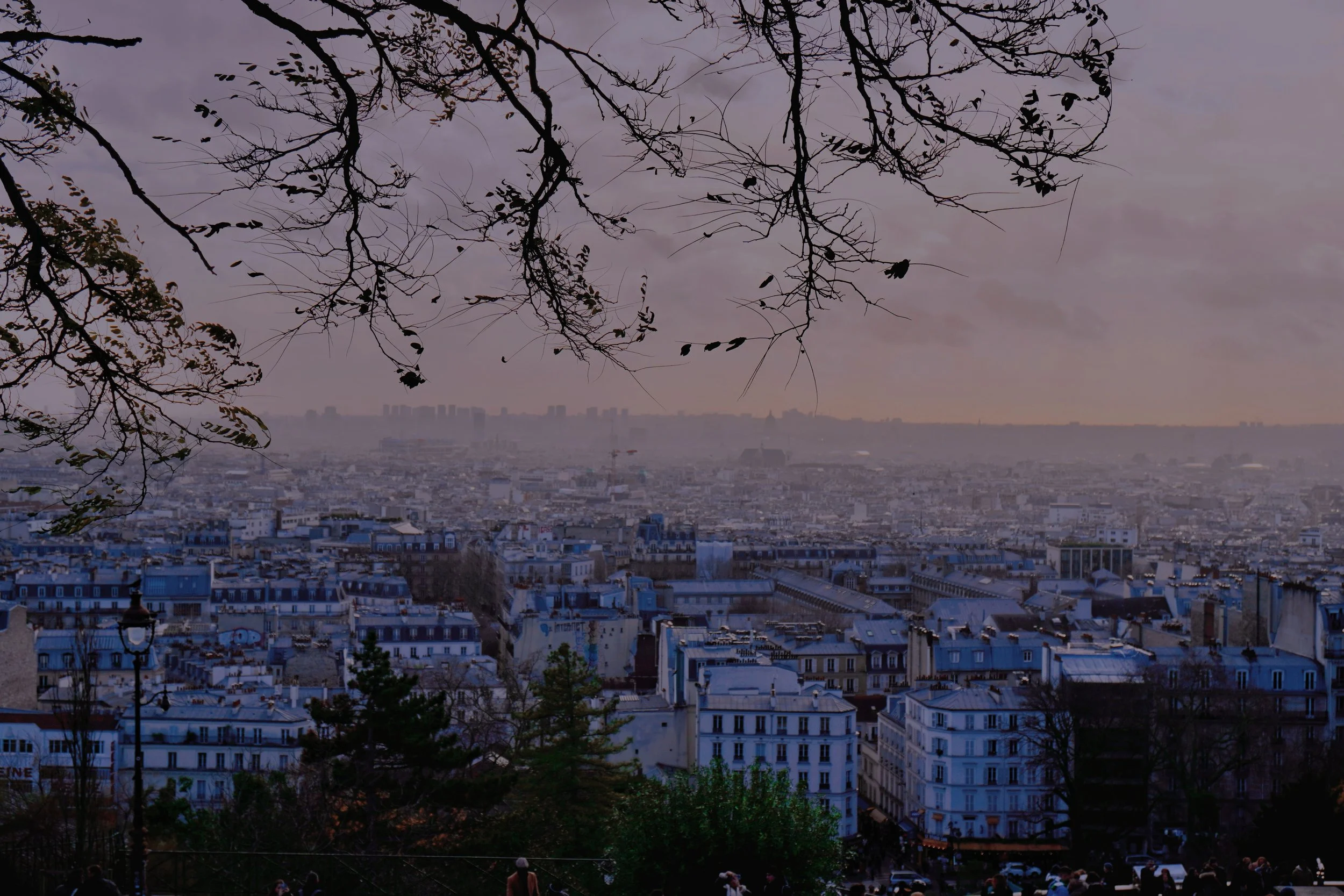
The scene of Paris.
Photo by Pei-Ju Chen.
This oil painting of Montmartre gifted to you, in front of your screen, to Montmartre, the art of the corner, to me, my dearest self, and to Paris, the dearest winter of December.
How to get here?
Place to visit: Montmartre
Transportation:
Arrived at Lamarck-Caulaincourt on metro 12.
Walked up the stair case and started at the Rue de l’ Abreuvoir.
Recommended road map app — Citymapper
More into the Corner of Montmartre